Solar since 2005
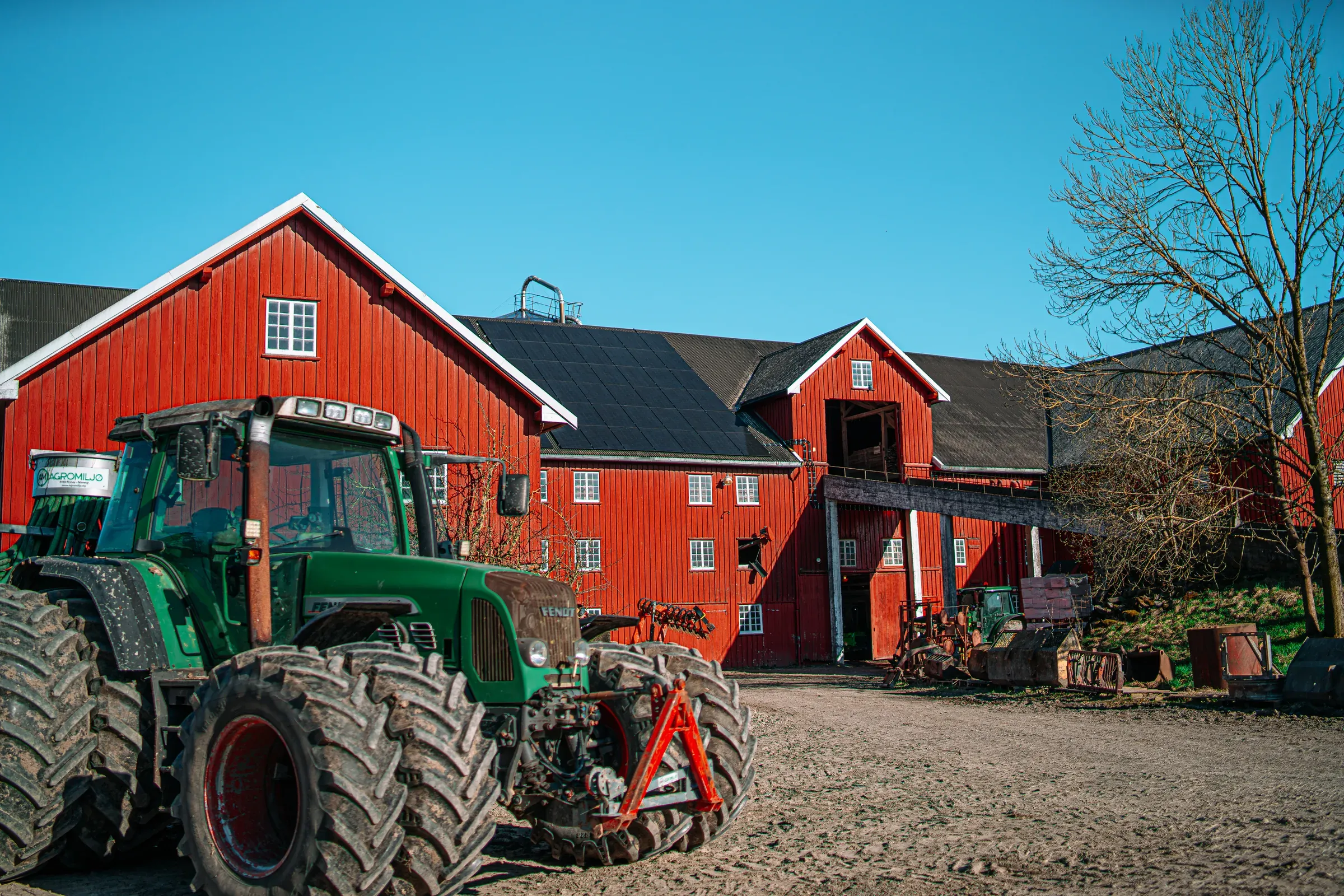
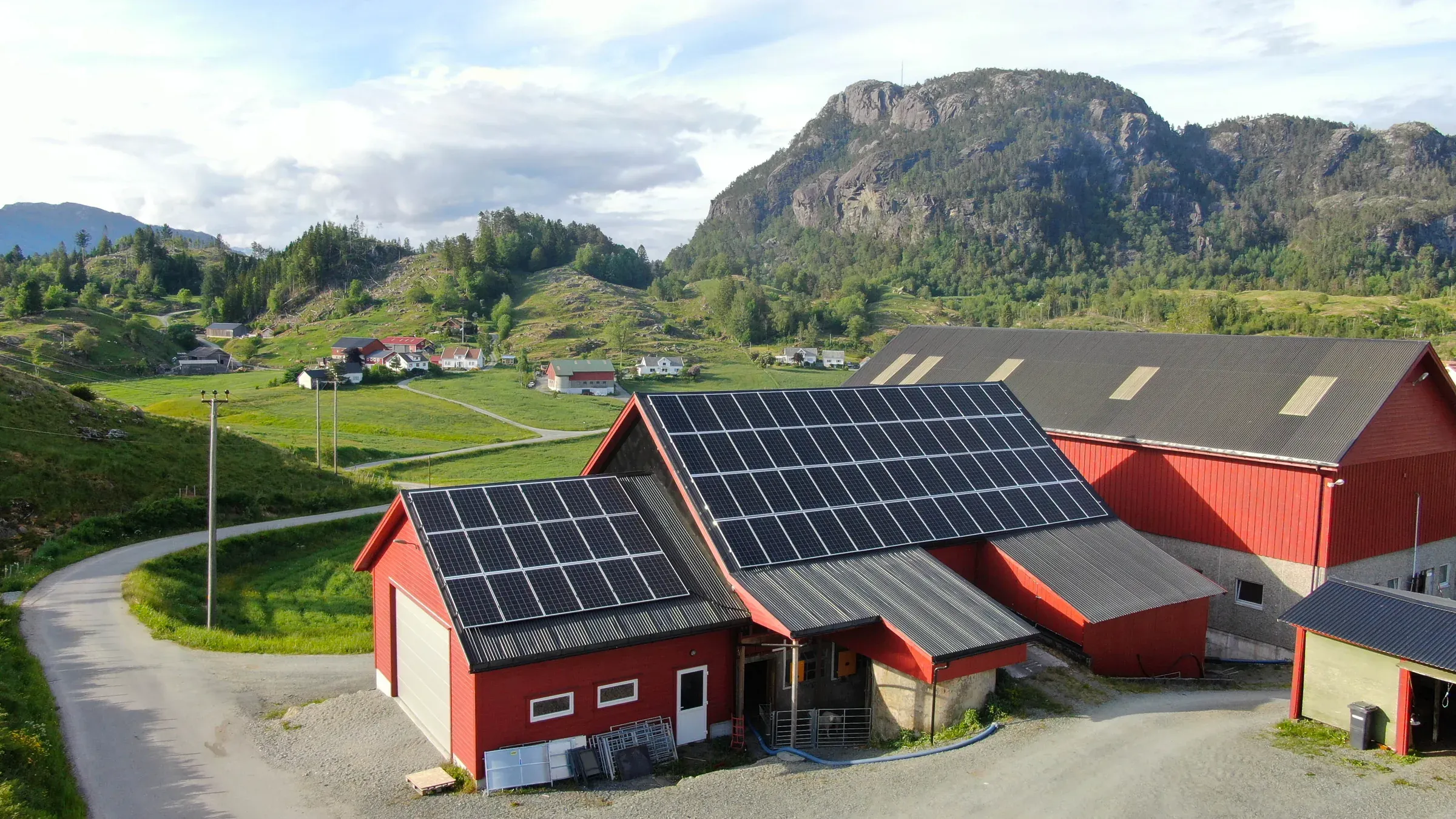
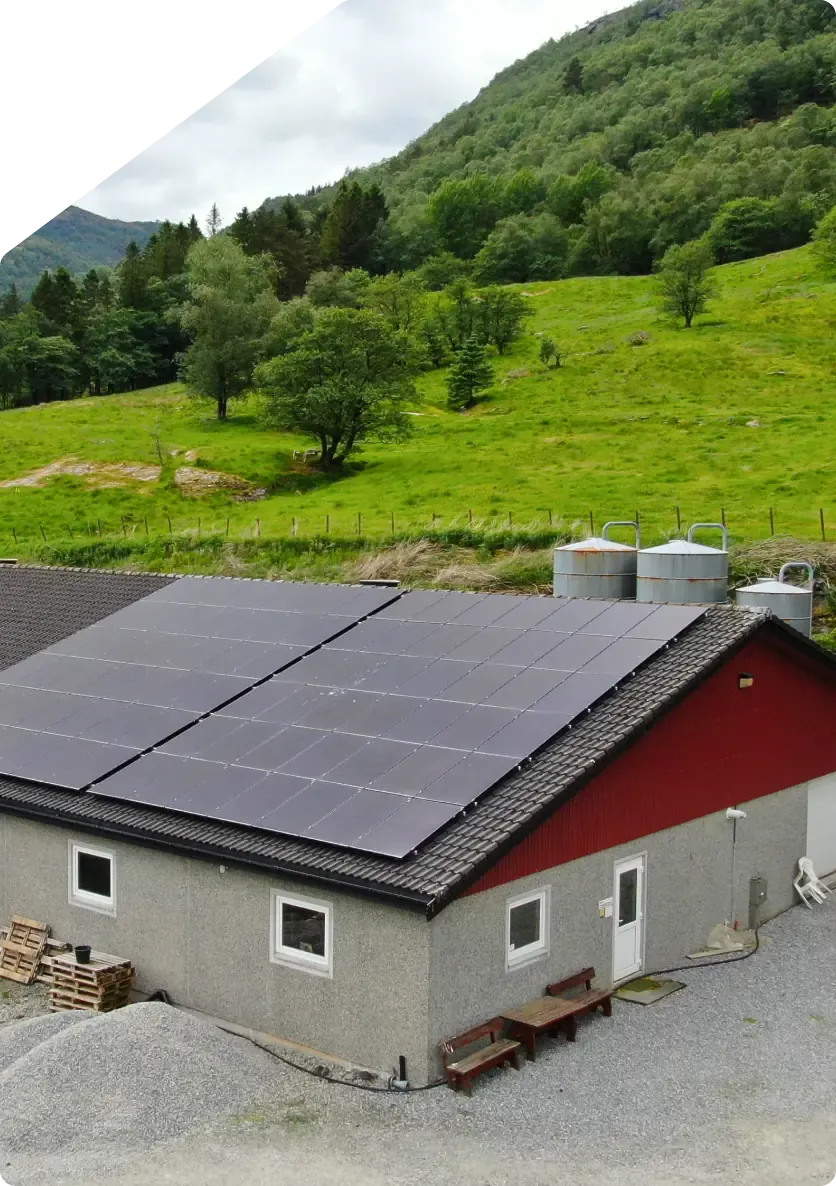
Solar panels for farms and agriculture
We deliver solar solutions that strengthen your farm business and help build a greener agriculture.
Solsjekk
See what the roof can give – in two minutes
Enter the address of the farm and you get a proposed system, annual output and investment. Barn, farm building or cowshed.
No sign-in. We read the roof from aerial imagery and the Norwegian Mapping Authority’s elevation model. The figures are an estimate before a site survey. The tool is in Norwegian and searches Norwegian addresses. Open Solsjekk.
BENEFITS
The benefits of solar for agriculture
Investing in solar is a forward-looking, sustainable choice for agriculture – one that pays for itself and is good for the environment.
-
Lower bills and self-sufficiency
Solar cuts your electricity costs and shields you from volatile energy prices. Selling surplus power back to the grid adds a second income stream that strengthens the return.
-
Get the most out of your farm's roof space
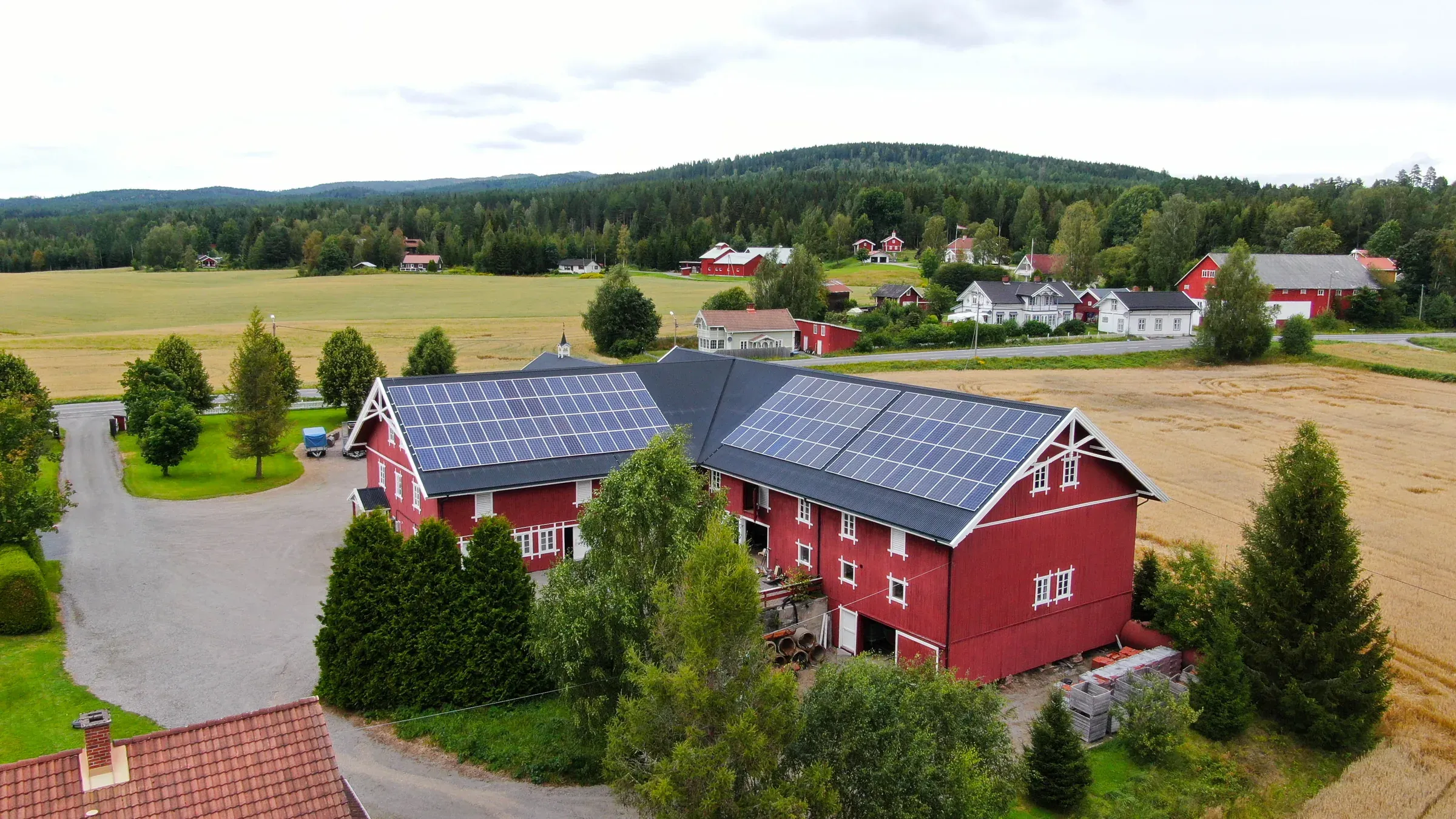
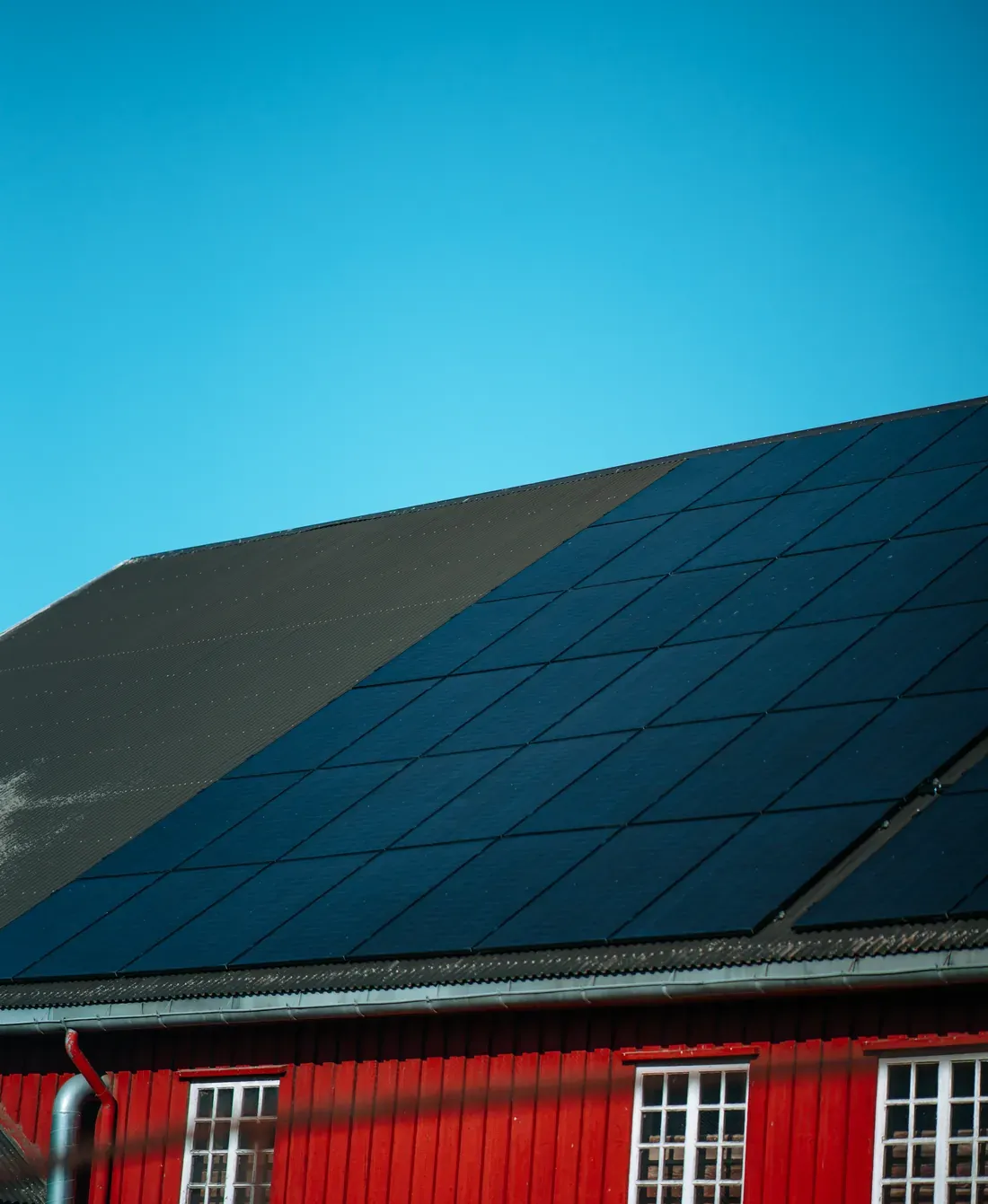
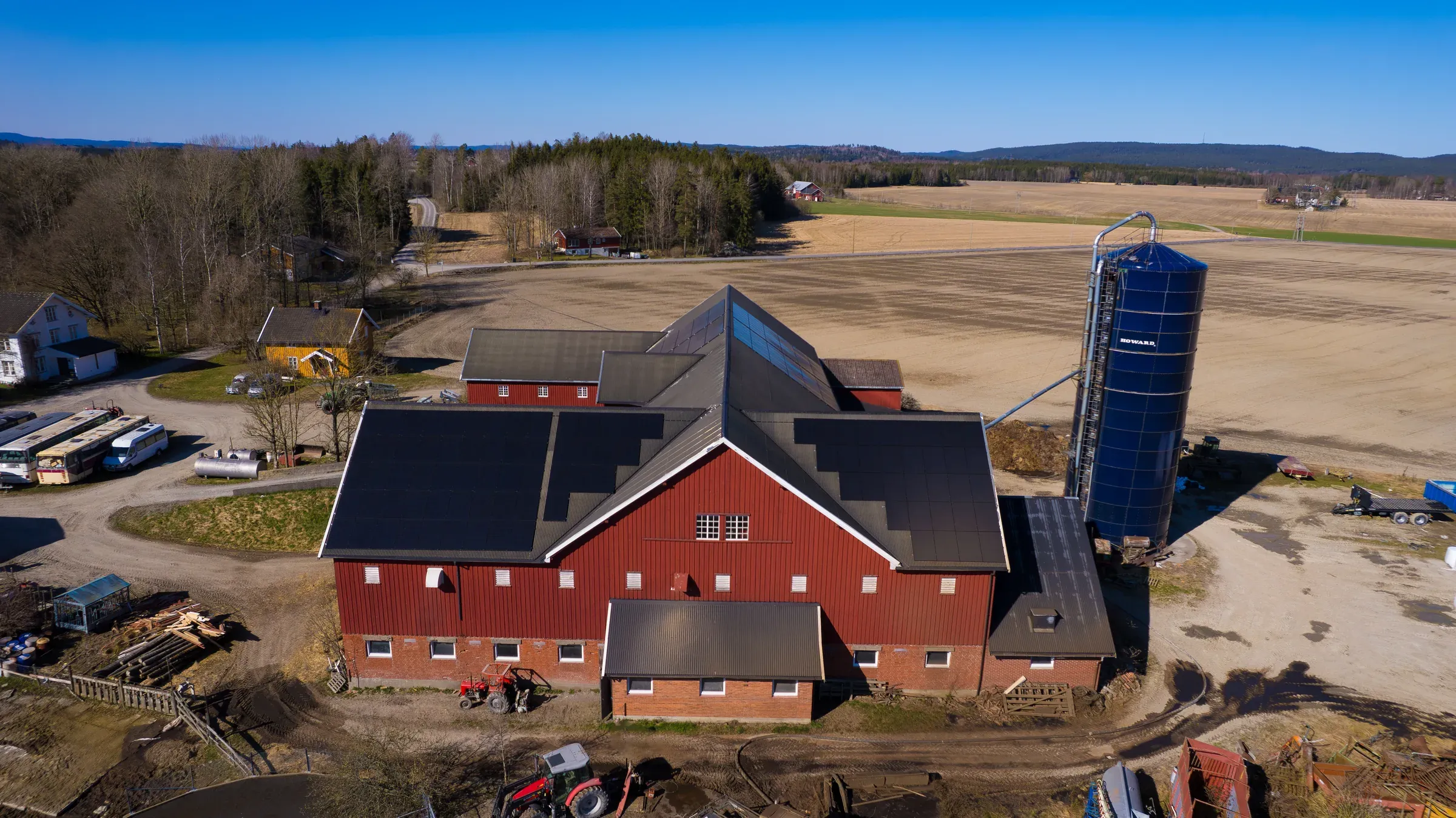
Large roof surfaces are ideal for solar. By making efficient use of barn roofs and unused space, we help you maximise the electricity your farm produces.
-
Sustainable operations
Solar energy shrinks your carbon footprint and demonstrates sustainable practice in cutting CO2 emissions from agriculture.
-
Higher property value
A solar system with a long service life and minimal maintenance is a sound investment that can raise the market value of the farm.
OFFER
Låvepakken – an exceptionally good offer on solar
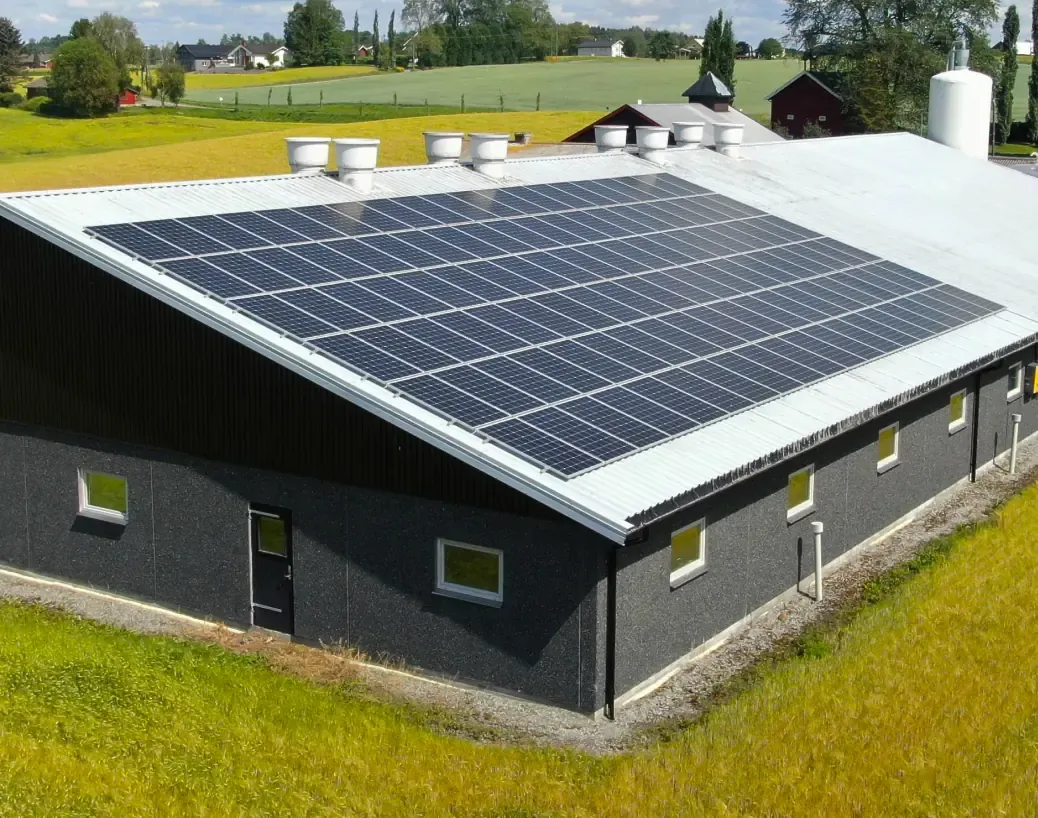
Låvepakken (the Barn Package) is a particularly good offer for anyone who wants solar on the farm roof and does not need a bespoke design.
When you get in touch, we arrange a site survey to make sure this is the right solution for you, with a secure energy supply and the best possible return. After the survey we send you a quote, which you can then make your final decision on.
Price per kWh from: 34 øre | Payback period in the worked examples: 8–9 years
General terms:
- The roof must be trapezoidal sheeting, corrugated iron or timber, with a pitch of between 5 and 50 degrees
- Maximum height of 6 metres to the eaves
- Applies to a single roof surface
- Sufficient capacity in the electrical installation
- Price excludes VAT
Starter package
36 panels · kr 149.000,-
What the starter package includes:
- 36 × 455 Wp panels from one of our regular suppliers. The panel make is stated in the quote
- Inverter matched to your electrical installation
- Mounting system and all the necessary equipment
- Complete installation
The system is estimated to cost 42 øre per kWh over a service life of 30 years. At a price of 149.000 kr excluding VAT, that gives a payback period of 9 years. Remember that you pay no grid charges on the electricity you produce yourself.
Large package
72 panels · kr 240.000,-
What the large package includes:
- 72 × 455 Wp panels from one of our regular suppliers. The panel make is stated in the quote
- Inverter matched to your electrical installation
- Mounting system and all the necessary equipment
- Complete installation
The system is estimated to cost 34 øre per kWh over a service life of 30 years. At a price of 240.000 kr excluding VAT, that gives a payback period of 8 years. Remember that you pay no grid charges on the electricity you produce yourself.
How it works
Complete, high-quality solutions. Delivered fast.
Solcellespesialisten tailors the system to your roof, on any scale – small or large.
-

Step 1
A conversation and a free survey
In that first conversation we discuss your needs and explore the potential of your property. If you would like, we are happy to come out for a free survey and take a closer look at conditions on your farm.
-

Step 2
Proposal and quote
Based on the survey we develop a tailored solution and present a detailed quote. It shows a layout of the system, cost estimates and the energy savings you can expect.
-

Step 3
Efficient installation
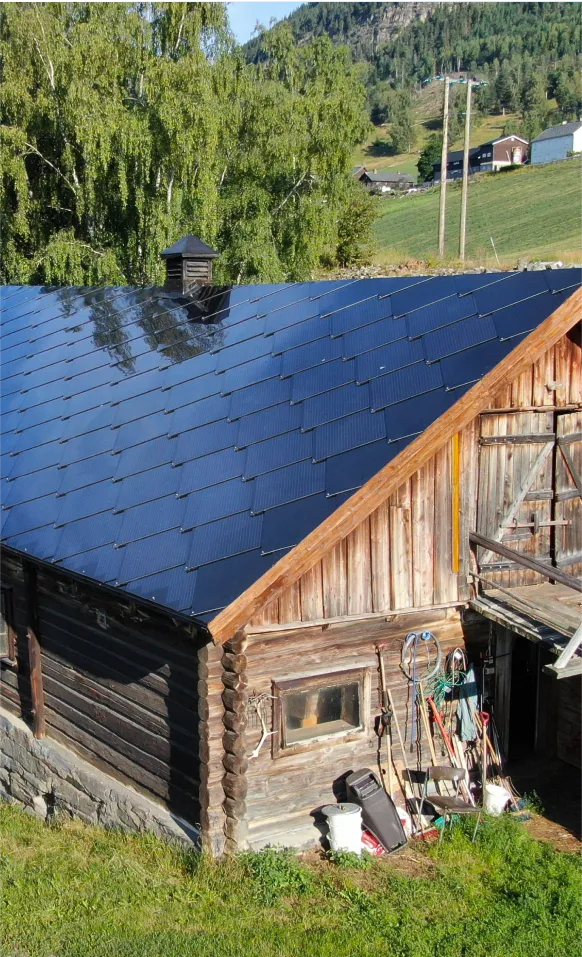
Our team of local experts handles the whole installation process, from safety through to the physical installation, and helps you check with the local authority whether the installation needs planning permission. We make sure your solar system goes up quickly and efficiently, with minimal disruption to you.
-
Step 4
After installation
Once the installation is complete, we connect the system to the grid and you start producing your own electricity straight away. A service agreement covers monitoring, maintenance and customer support whenever you need it.
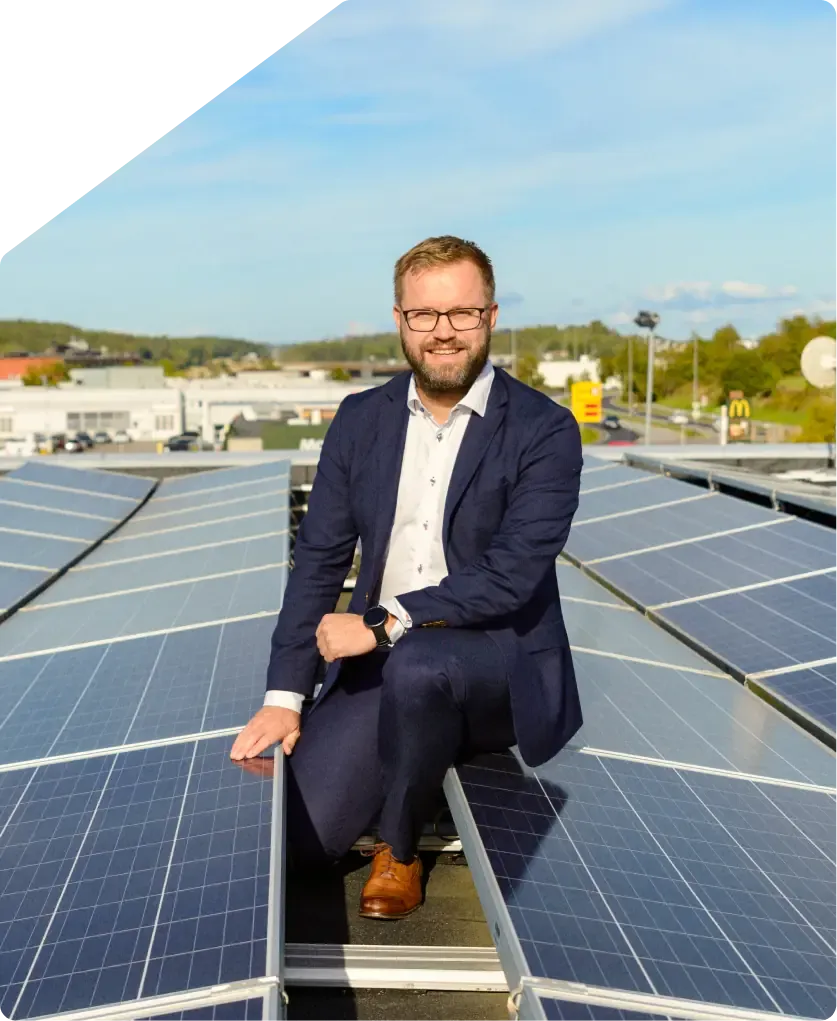
A fantastic company. You get help here whenever you need it, on systems large and small.

ABOUT US
Your dependable partner for solar energy in agriculture
Solcellespesialisten has delivered solar in Norway since 2005, 188 MWp and more than 400,000 panels installed in total. In December 2025 EnergiSmart Norge AS bought the commercial division and the brand out of the bankruptcy estate, and carries the name Solcellespesialisten forward.
We are listed in the Norwegian register of electrical undertakings (Elvirksomhetsregisteret), qualified in StartBANK and Achilles, members of NHO Elektro and Fornybar Norge, and certified as a Miljøfyrtårn. We are with you from the first survey to the finished system, so you can be confident that the energy you produce yourself is in the best hands.
-
Our goal
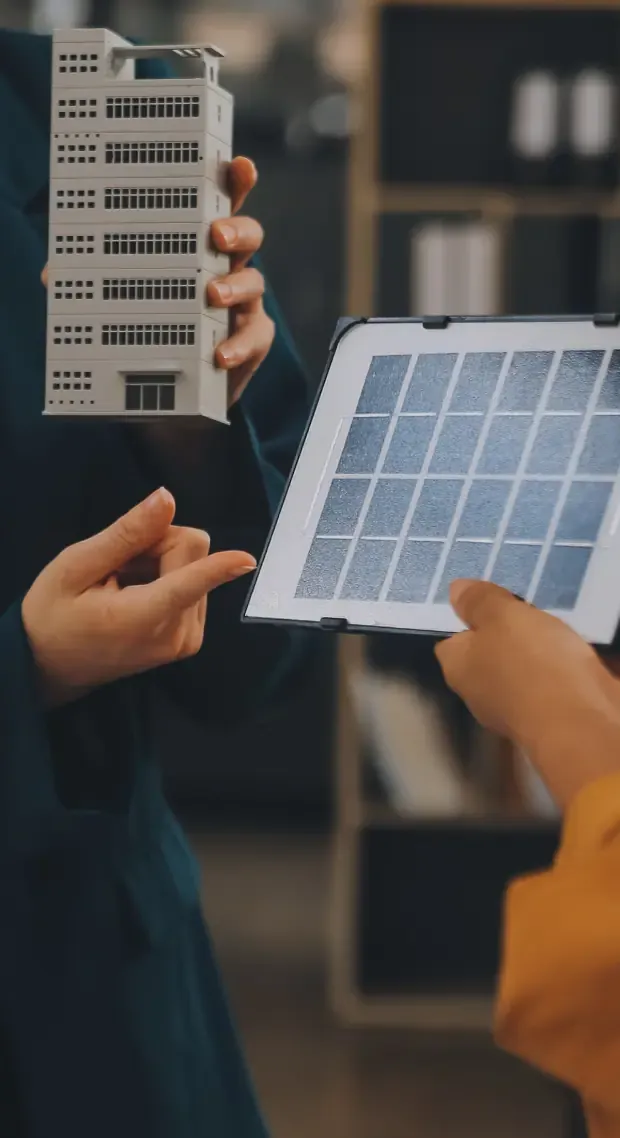
To offer high-quality, cost-saving renewable energy solutions to commercial buildings, agriculture, housing co-operatives, jointly-owned properties and solar parks, built on renewable technology.
-
Our vision
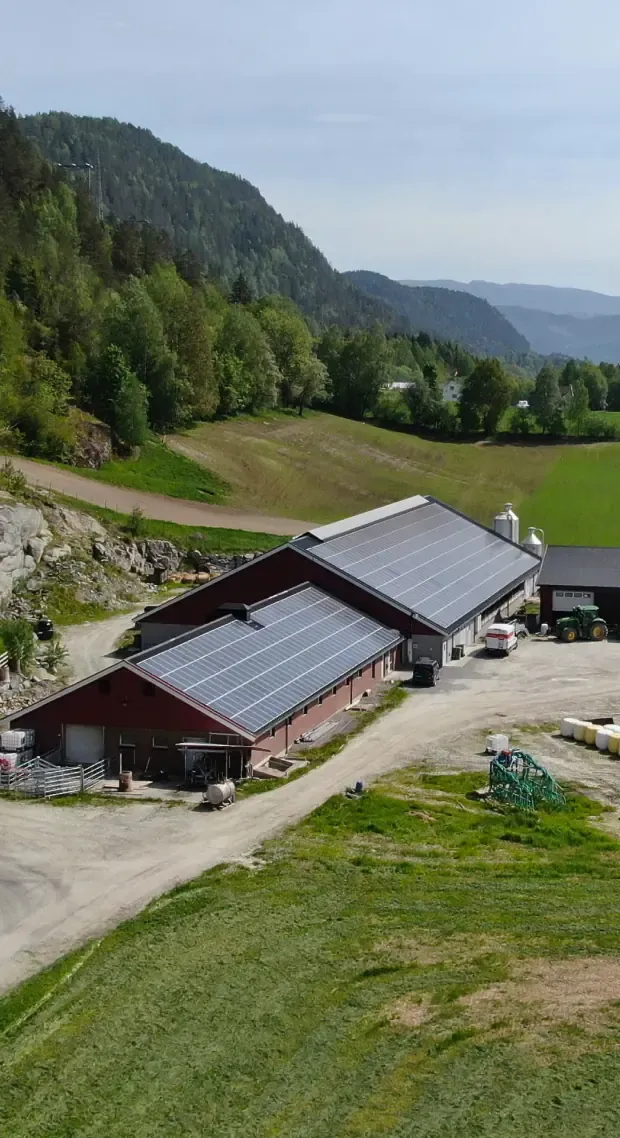
To save the climate with renewable energy by becoming a leading contributor to a world where all energy consumption is renewable.
ESG
Sustainability in every solar cell.
Solcellespesialisten does not only prioritise delivering first-class solar solutions; we are also deeply committed to sustainability and ESG.
Through a commitment to ethical trade, responsible operations and secure supply chains, Solcellespesialisten intends to remain a sustainable choice. We carry out thorough supplier assessments and are certified as a Miljøfyrtårn business.
With Solcellespesialisten you choose a partner dedicated to a greener and fairer world.
More we deliver
Battery, service and charging
-
Battery and storage
Solar output peaks in the middle of the day, while a farm consumes most of its power morning and evening. A battery moves the production to where it is used – and cuts the capacity peak as well.
-
Service agreement
The installation sits on a roof you rarely climb. We handle the annual inspection, fly the drone thermography and watch the output for you.
-
Charging installations
Charging machinery or heavy vehicles on the farm quickly draws more power than the grid connection allows. We design the installation with a battery to absorb the peak.
FAQS
Questions and answers about solar panels for farms
…or can you not find what you are looking for?
Contact us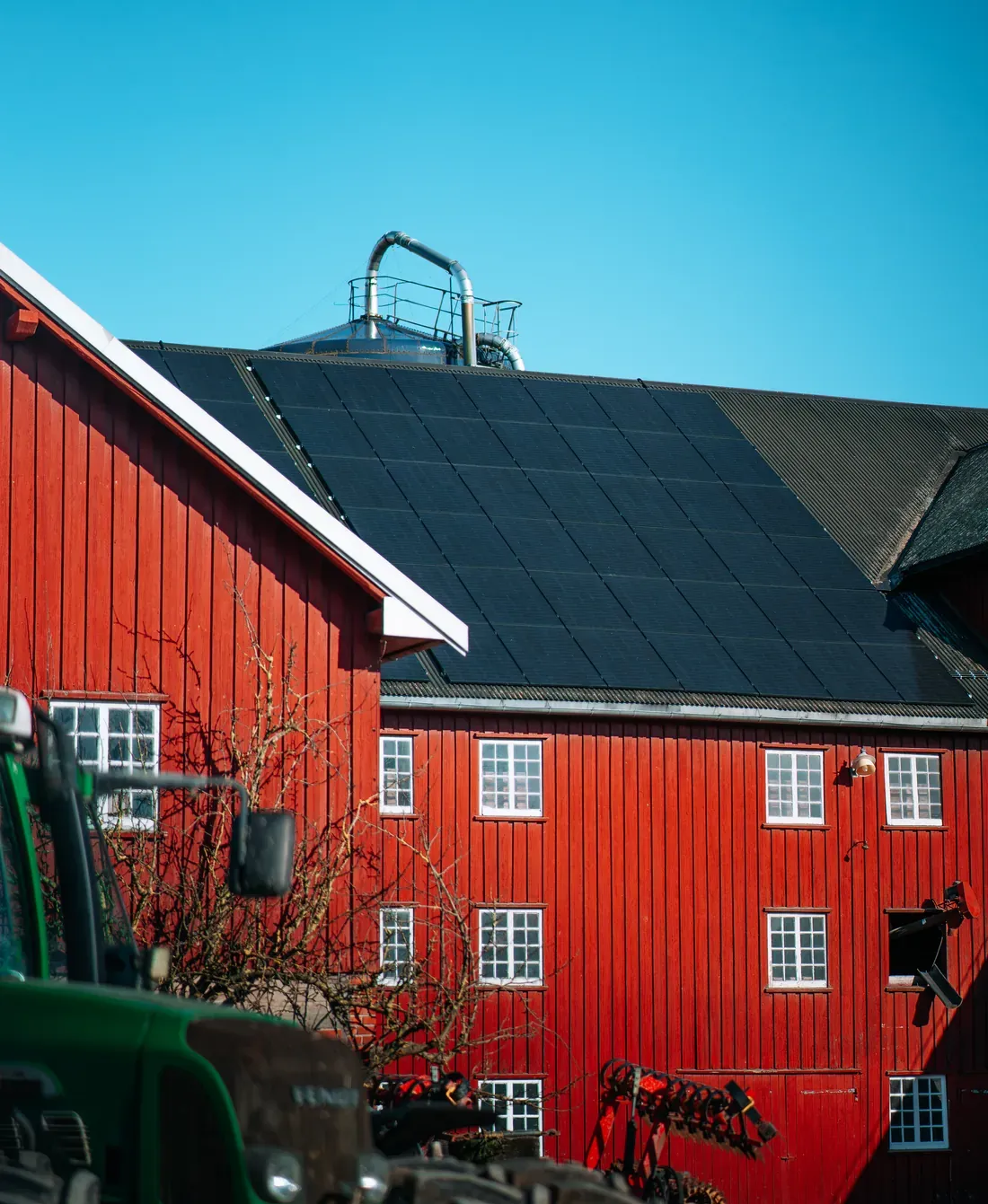
Installation before/during/after
-
01. Where can I check the solar conditions on the roof?
You can check the conditions on your roof by searching for your address at solkart.no. For commercial buildings, housing co-operatives and jointly-owned properties, farms and solar parks, you can also contact our advisers at bedrift@solcellespesialisten.no. We are always happy to come out for a site survey.
-
02. Which side of my roof is best suited to solar panels?
South-facing roof surfaces usually give the highest annual output, peaking around the middle of the day. East- and west-facing surfaces generate more in the morning and the afternoon, which spreads production more evenly across the day. In our own PV calculator on solkart.no, a roof in Oslo gives around 1 006 kWh per kWp a year when the surface is pitched 25 degrees to the south, against around 800 kWh per kWp on a flat roof with panels at 10 degrees to the east and west (run on 17 September 2026, P50, 5% system loss, snow and soiling losses included). Shading from neighbouring rows and the surroundings is not included in the figures. Total annual output is somewhat lower, but east/west can suit you particularly well if your consumption is heaviest early or late in the day. This holds for any type of building, whether a housing co-operative, a barn or an industrial building with a flat roof. You get the figure for your own roof in Solsjekk.
-
03. Can I have solar panels on more than one roof surface?
In principle you can have solar panels on several roof surfaces. Because of technical requirements there are certain limits on the number of panels per roof surface. It can also become more expensive the more surfaces are covered, as more inverters may be needed.
-
04. Does a solar system need planning permission from the local authority?
It has to be assessed building by building. A solar energy installation is a building services installation under the Norwegian Planning and Building Act (pbl. § 20-1 bokstav f). Installing or altering one within a single dwelling unit or fire compartment counts as a simple installation and is exempt from the application requirement, but on a farm building the system often spans several fire compartments, and then the exemption does not apply. The same goes if the building sits within a conservation area or close to the shoreline or a railway line. The new exemption for solar energy installations that applies from 1 July 2026 covers small houses and certain detached buildings – not farm buildings and commercial buildings. We help you check this with the local authority before installation.
-
05. Does the solar system have to be registered with the grid company?
Every solar system must be registered with the grid company. We take care of that process. All we need from you is your meter number. The role your building takes on the grid depends on how much the installation can export to the grid. As long as the installation exports no more than 100 kW, you are registered as a plus customer, the formal term for a prosumer – a customer who both uses and produces electricity – and you are paid for the surplus exported to the grid. If it exports more, you become a producer, with separate terms for feed-in and settlement. We establish which category your building falls into before the system is designed.
-
06. When will I get a date for the installation?
Once the quote is confirmed, the project manager agrees the installation date with you. When it can happen depends on the scope of the project, delivery of materials and any applications to the local authority and the grid company.
-
07. What do I do if the goods are damaged?
If the goods are marked “registered damage”, this is a routine from the supplier and something we will follow up. In most cases only the packaging is damaged and the goods themselves are unaffected. If you can see that the goods are extensively damaged, please contact us as soon as possible on 45 72 87 80.
-
08. Who installs the solar panels for Solcellespesialisten?
Solcellespesialisten has its own installers, who are experienced at installing solar and have a solid background in both the electrical and the construction side of the work. We have the capacity to install around two in three projects with our own employees. The rest are carried out by regular subcontractors we have worked with for many years.
-
09. When is the system commissioned?
As a rule we have our own installers for connecting the solar system to the grid. They usually come once the roof installation is finished. You will receive a separate email with the connection date.
-
10. Do the solar panels need maintenance?
Solar panels are essentially self-cleaning. The installation should still be inspected in line with the manufacturer’s recommendations. The largest installations should have an on-site inspection several times a year, the smallest every three years. An inspection can include a visual check from the ground and making sure the cables are secured and protected. If the panels are still particularly dirty after rain, you can hose them down gently. Avoid brushes and snow shovels, as these can scratch the panels and void the warranty.
Product and warranty
-
01. What is an inverter?
An inverter converts the direct current (DC) from the solar panels into the alternating current (AC) the grid uses. Its size depends on the output of the installation. Cables run from the inverter both to the solar array and to the fuse box, which may be inside the building. An inverter can make some noise while producing, and there are also several fire safety requirements governing where it can be placed. Our installers help you find the best position when they fit the panels.
-
02. What kind of solar panels does Solcellespesialisten use?
We supply solar panels in different sizes and power ratings from several manufacturers, and choose the panel to suit each project. Today we use panels from LONGi, Tongwei, AIKO and JA Solar. We weigh performance, the roof structure and how the building is used to find the best solution.
-
03. How big is a solar panel?
The size of a solar panel varies from manufacturer to manufacturer, and generally increases with the output of the panel. Smaller panels are usually around 1.7 metres tall, while larger panels for industrial buildings can be up to 2.4 metres. We choose the panel to suit each project.
-
04. How much snow can the solar panels take?
The panels can take a great deal of snow. In areas with heavy snowfall we fit an extra rail beneath the panels so they do not break under the snow load. The project manager will assess this before installation.
-
05. How much wind can the solar panels take?
The wind load is calculated for every installation to NS-EN 1991-1-4 with the Norwegian national annex, not only where the building is exposed. Three things determine the load: the reference wind velocity for the municipality, the terrain category and the height of the building. A farm building standing free in open farmland gets a higher load than one sheltered by forest or other development. The standard also sets stricter requirements along the roof edge, at the gables and in the corners than in the middle of the roof, and there the fixings sit closer together. We take the terrain category from map data rather than estimating it; this is how.
Costs and support
-
01. What is included in the price of a turnkey solar system from Solcellespesialisten?
A turnkey system from us includes everything: grid registration, design, installation, safety work, commissioning, AC connection and the final documentation.
-
02. Who buys my surplus electricity?
The surplus is sold to your electricity supplier under the agreement you have with them, and the terms vary between suppliers. If the installation can export more than 100 kW to the grid, you are no longer a plus customer but a producer, and selling the power requires a separate agreement. We establish which category the installation falls into before it is designed.
Production and monitoring
-
01. Can I choose whether the electricity the panels produce is used in the building or fed into the grid?
No. The electricity produced by the panels always goes to consumers in the building first. If the panels produce more than the building uses, the surplus automatically goes out onto the grid.
-
02. Do solar panels generate all year round?
Solar panels always generate something as long as they are not covered and daylight is falling on the surface of the panel. In winter there is generally little sun, and snow will cover the panels. We have calculated the seasonal split in our own PV calculator on solkart.no, run on 17.09.2026: on a barn roof in Rakkestad, 97% of the annual output falls between March and October with panels at 10° facing east and west, and 93% on a south-facing roof pitched at 25°. At Hamar the shares are 98% and 95%. Across the country the share ranges from 91% (Stavanger, south-facing 25°) to close to 100% (Tromsø, flat roof) – the further north, the shorter the season. The assumptions are the same as in our calculator: 5% system losses, crystalline panels, free-standing mounting, a P50 solar year, terrain horizon, and snow and soiling losses included. Shading from neighbouring rows and the surroundings is not included in the figures. You get the figure for your own roof in Solsjekk.
-
03. How can I monitor the electricity the panels produce?
All of our inverters come with production monitoring in the form of a phone app. The electrician who commissions the system will set this up and show you how to use the app.
-
04. What happens to production if there is a power cut on the grid?
If the inverter is connected to the grid, a power cut on the grid will cause the inverter to stop supplying electricity. You will not have your own consumption covered by the solar panels either while the grid is down.
-
05. What is the difference between kWp and kWh?
Kilowatt-peak (kWp) is the rated output of each solar panel under standard test conditions (STC). STC sets requirements for temperature, irradiance and angle that are only met on certain occasions in Norway. Production over the rest of the year will be a percentage of the stated kWp. Kilowatt-hours (kWh) are a measure of energy, given by power multiplied by time. If a solar panel produces at 1 kW for one hour, it has produced 1 kWh of electrical energy.
-
06. What is the difference between DC and AC electricity?
DC stands for Direct Current and AC stands for Alternating Current. Solar panels produce DC. The electricity in buildings and on the grid is always AC, which is why we need an inverter to turn DC into AC.
Today is the best day to take a step towards a brighter, more sustainable future with solar.
We normally reply within one working day.